Francesca Malagnini
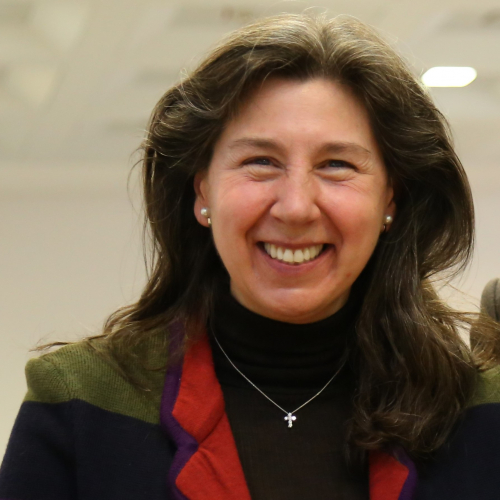
Francesca Malagnini
Biographical Note
Francesca Malagnini’s research activity spans several fields. Specifically, she has focused on the analysis of ancient literary texts, with particular attention to the linguistic-philological and codicological study of Giovanni Boccaccio’s autographs, on the analysis of nineteenth-century literary texts—especially on the prose of Manzoni, also in relation to the inclusion in the Quarantana edition of the vignettes by Francesco Gonin. Other areas of interest also concern the study of Tommaseo as a lexicographer, journalist, poet, and educator; as well as the teaching of Italian and Italian as a second language (L2). Regarding the latter, she has produced a monograph on the relationship between the history of the language and teaching; she has written a normative grammar relating it to everyday language; she has outlined a diachronic overview of the language of the semi-literate. In recent years, she has devoted herself to the study of semi-literate wall writings from the fifteenth and sixteenth centuries preserved in the Tezon on the island of Lazzaretto Nuovo in Venice and to another volume dedicated to the epigraphic writings of the Lazzaretto Vecchio of Venice. She also deals with lexicographic studies, writing articles for the Lessico Etimologico Italiano based at Saarbrucken University, conceived and previously directed by Max Pfister and now led by Wolfgang Schweickard.
She is currently a member of the research team for the European Research Council (ERC) Advanced Grants 2020 project entitled “Graff-IT, Writing on the Margins. Graffiti in Italy, 7th to 16th century” (April 22, 2021).
She was National Scientific Coordinator (PI) and coordinator of the lead unit at the University for Foreigners of Perugia from January 12, 2021, for the PRIN project “PHRAME - Phraseological Complexity Measures in learner Italian. Integrating eye tracking, computational and learner corpus methods to develop second language pedagogical resources,” project code 20178XXKFY, replacing the originator Stefania Spina.
From October 5, 2023 to February 28, 2026, she was a member of the research unit of the PRIN (PI Massimo Fanfani, replaced from November 10, 2023 by Donatella Martinelli) at the University of Parma in the project Archive of the Lexicography of the Nineteenth-Twentieth Century (ALON), approved by decree no. 901 of 21/06/2023, project code 20222FC7A8.
Lessons
2026/2027
Storia della lingua italiana e laboratorio di italiano scritto9 CFU
Corso di laurea: Lingua e cultura italiana nel mondo digitale
Linguaggi professionali del made in italy6 CFU
Corso di laurea: Made in italy, cibo e ospitalità
Fondamenti dell’acquisizione linguistica e della didattica dell’italiano l2/ls: l’italiano fuori d’italia15 CFU
Corso di laurea: Master di ii livello in didattica dell’italiano lingua non materna. insegnamento dell’italiano per il lavoro e per lo studio
L'insegnamento delle lingue e la formazione dell'italiano: suoni e struttura della lingua: la grammatica dell'italiano tra norma e uso15 CFU
Corso di laurea: Master di i livello in didattica dell'italiano lingua non materna
2025/2026
Linguaggi professionali del made in italy6 CFU
Corso di laurea: Made in italy, cibo e ospitalità
Laboratorio di italiano per la comunicazione3 CFU
Corso di laurea: Comunicazione internazionale e pubblicitaria
Elementi di storia della lingua italiana6 CFU
Corso di laurea: Digital humanities per l'italiano
Storia della lingua italiana e laboratorio di italiano scritto9 CFU
Corso di laurea: Lingua e cultura italiana nel mondo digitale
Graffiti, disegni, marchi e scritture esposte: fonti storiche e linguistiche1 CFU
Corso di laurea: Studi linguistici, filologici e artistico-letterari
2024/2025
Elementi di storia della lingua italiana6 CFU
Corso di laurea: Digital humanities per l'italiano
Graffiti, disegni, marchi e scritture esposte: fonti storiche e linguistiche1 CFU
Corso di laurea: Studi linguistici, filologici e artistico-letterari
Linguaggi professionali del made in italy6 CFU
Corso di laurea: Made in italy, cibo e ospitalità
2023/2024
Linguaggi professionali del made in italy6 CFU
Corso di laurea: Made in italy, cibo e ospitalità
Scrittura professionale e per il web6 CFU
Corso di laurea: Digital humanities per l'italiano
Elementi di storia della lingua italiana6 CFU
Corso di laurea: Digital humanities per l'italiano
2022/2023
Scrittura professionale e per il web6 CFU
Corso di laurea: Digital humanities per l'italiano
Elementi di storia della lingua italiana6 CFU
Corso di laurea: Digital humanities per l'italiano
Linguaggi professionali del made in italy6 CFU
Corso di laurea: Made in italy, cibo e ospitalità
Italiano per la comunicazione6 CFU
Corso di laurea: Comunicazione internazionale e pubblicitaria