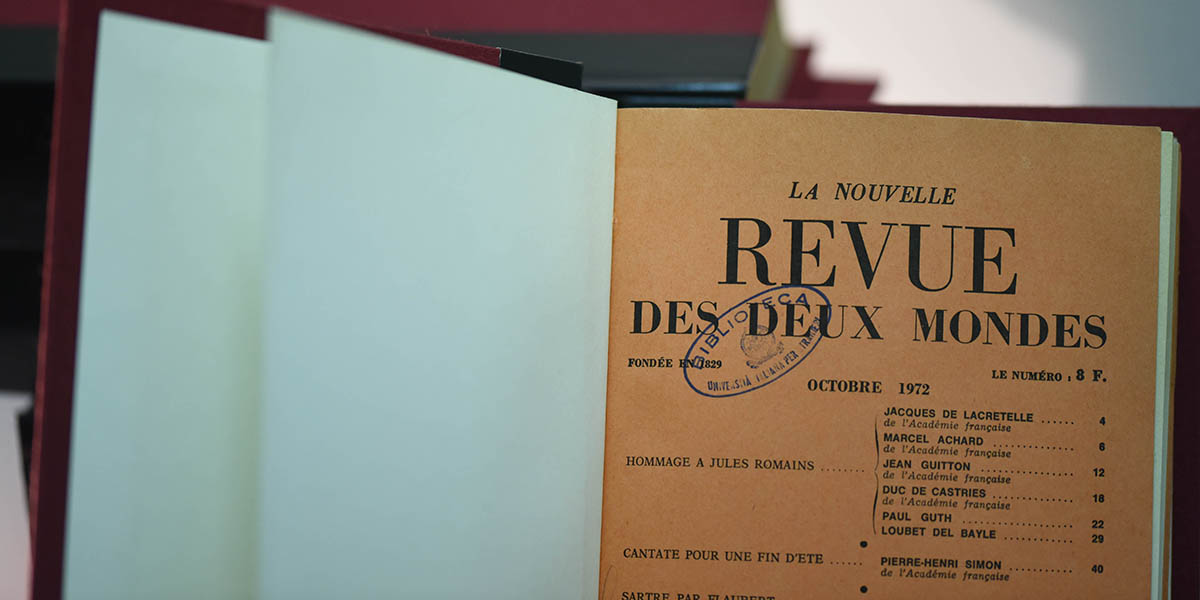
Initially a journal of literature, science and the arts, it was founded in Paris in 1829 by P. de Ségur-Dupeyron and P. Mauroy; in 1831 it was purchased by Auguste Auffray and F. Buloz was appointed its first editor.
At first literary, it later dealt with philosophy and science, and from 1833 with history and politics, due to the crisis affecting French society: the separation between Church and State, the Dreyfus Affair, the First World War, and the rise of totalitarian regimes.
It became one of the most important journals in France and a model for many others. Among its contributors were writers such as Charles Baudelaire, Victor Hugo, Alfred de Vigny, George Sand, Chateaubriand, Alfred de Musset, C.A. Sainte-Beuve, Alexandre Dumas, and Stendhal, as well as scientists and politicians.
Suspended in 1944, it resumed publication in 1947 with the title La revue: littérature, histoire, arts et sciences des deux mondes.
In 1956 it merged with the journal Hommes et mondes. Published from 1972 as La nouvelle revue des deux mondes, in 1976 it returned to its old title.
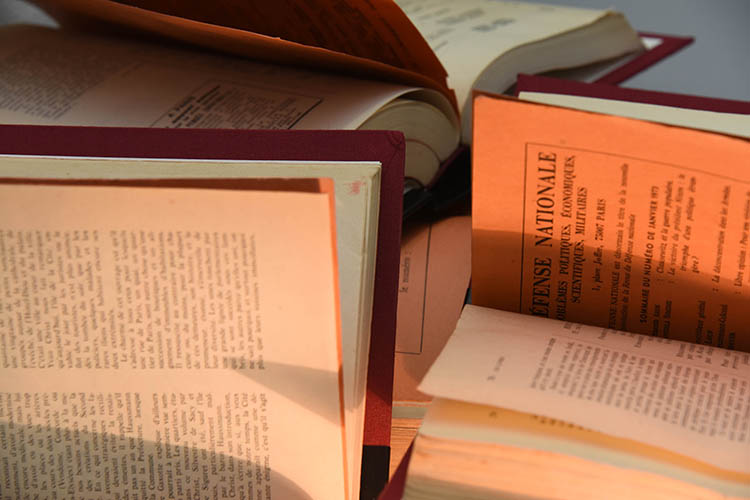
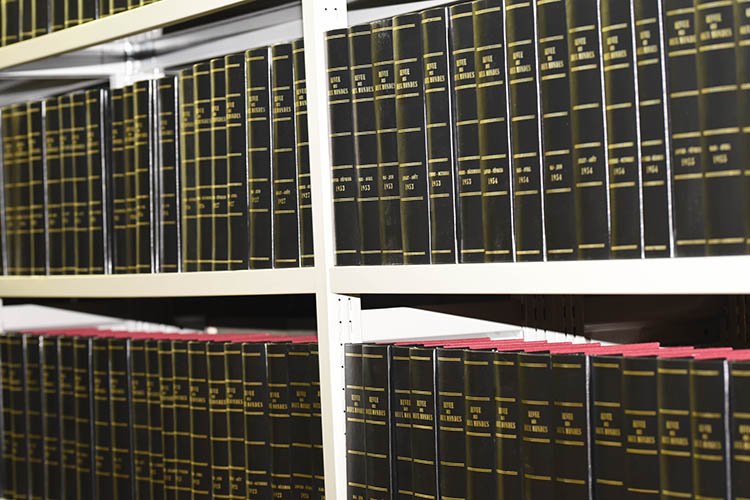
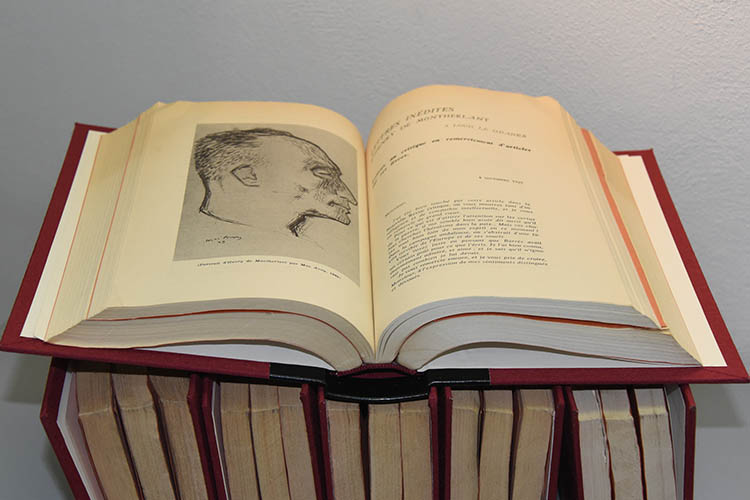
In 2020 it was restored and rebound to enable consultation. The work involved, in particular, all the issues from 1870 to 1973, for a total of 410 volumes, returning to the scientific community and the city a journal that, in the 1800s, became one of the most important in France and a model for many others.
A curious fact:
The “deux mondes” (“two worlds”) in the title refer to Europe and America. The Revue des Deux Mondes was in fact intended to serve as a link between the two worlds, to be a magazine of "travel", conceived as a fundamental way of gaining knowledge; hence the countless travel stories which, in the general collection of the Revue, form a true “heritage within the heritage”.